
Savings of up to 100,000 euros in a single zone—thanks to early leak detection
A real-world example from Stadtwerke Witten demonstrates how modern network monitoring directly impacts costs, efficiency, and water loss.
Successful Leak Detection in Practice - Witten Public Utilities Significantly Reduce Water Losses
How a utility company uses data loggers to detect damage more quickly, reduce water loss, and streamline processes.
The Witten Public Utilities faced a common challenge in its drinking water network: leaks were often detected too late, locating them was time-consuming, and minor damage frequently went undetected for long periods.
The use of modern data logging technology has fundamentally transformed this process. Today, anomalies are detected early and pinpointed with measurable success.
Products in use
The initial situation at Stadtwerke Witten
As is the case in many utility networks, leak detection in Witten relied heavily on traditional methods. Anomalies in the control system did not always lead directly to a clear pinpointing of the leak. Instead, inspection teams had to be dispatched to the affected areas to manually inspect the network.
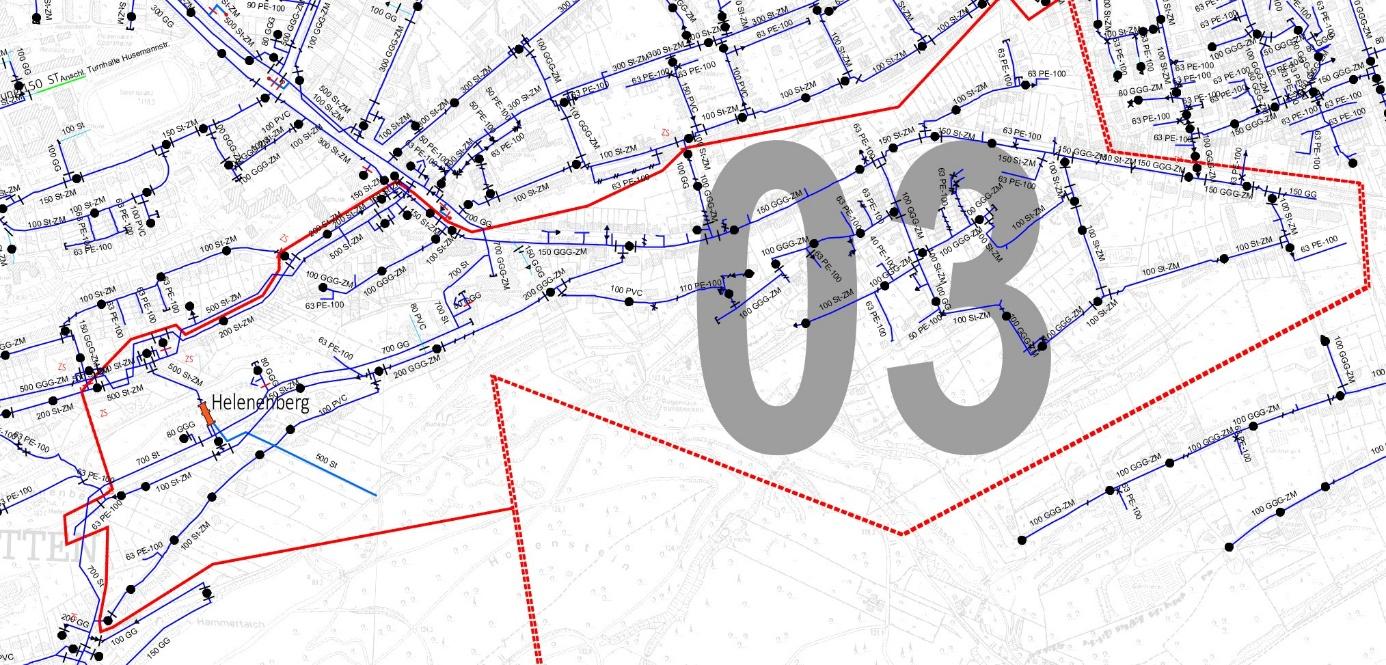
This approach was not only time-consuming but also inefficient. Large areas were inspected without knowing exactly where the damage was located. So-called non-detectable damage was particularly problematic. This occurred in areas without zone monitoring and often remained undetected until water began to leak visibly or a routine inspection was conducted.
The Use of Loggers in the Network
To increase transparency in the network and be able to respond more quickly to anomalies, Stadtwerke Witten decided to use loggers for continuous monitoring.
The systems continuously monitor changes in the network and provide specific indications of potential damage. This transforms leak detection from a comprehensive, time-consuming task into a targeted measure.
Surveillance teams are no longer deployed on a speculative basis, but are directed straight to the location in question. This significantly reduces search times while increasing the success rate.
Economic Benefits at a Glance
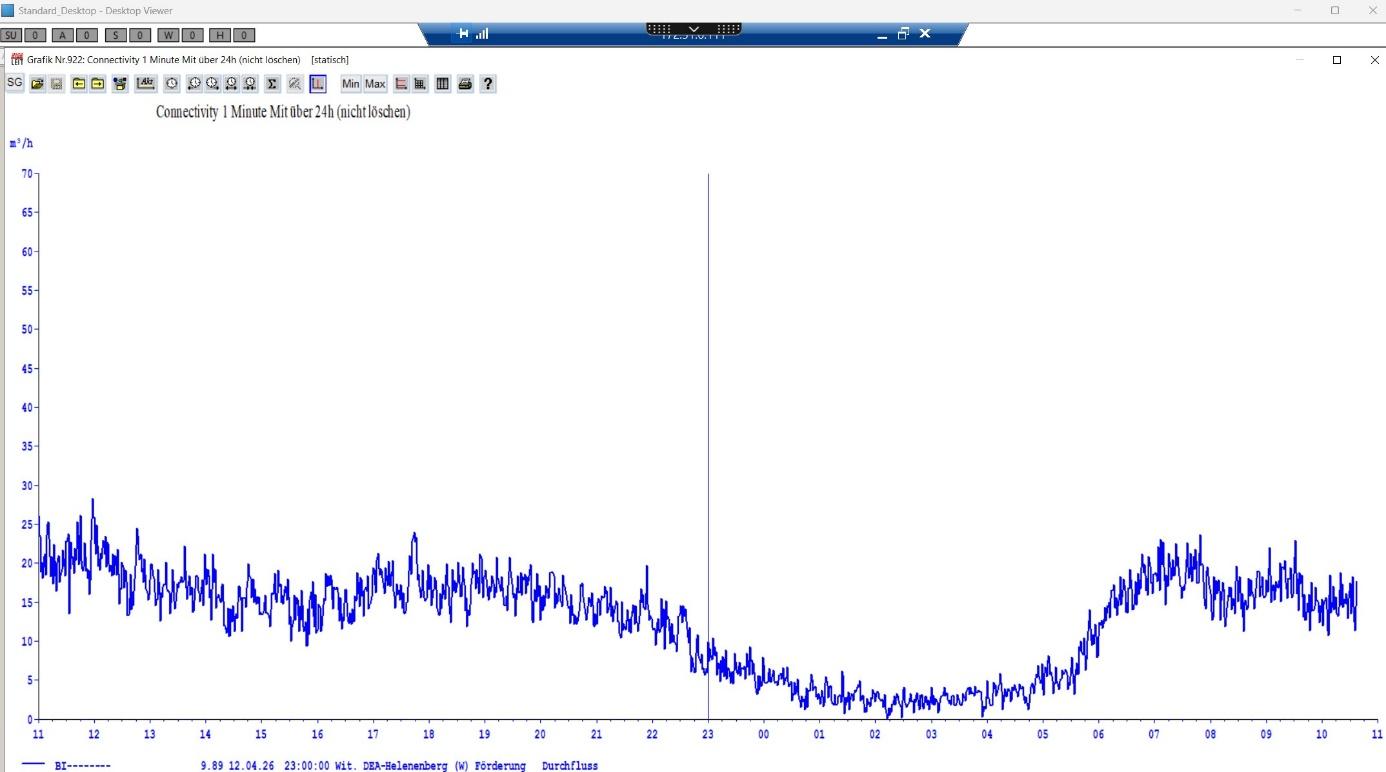
The documented damage cases at Stadtwerke Witten show that the use of loggers also pays off significantly in economic terms. With an average water loss of approximately 7 m³ per hour and early detection, each incident results in a savings of about 1,176 m³ of water. Based on a drinking water price of 1.60 to 2.59 euros per cubic meter, this corresponds to an economic benefit of approximately 1,882 to 3,046 euros per incident.
Across all 17 documented cases, this results in water savings of approximately 20,000 m³. This corresponds to a monetary benefit of approximately 31,987 to 51,779 euros for drinking water alone. In cases of more extensive damage detected at a later stage, the potential savings can be significantly higher. In one documented individual case, this results in a potential benefit of approximately €69,120 to €111,888.
Facts & Figures
0 m³
Savings per claim
up to 0 €
Savings per claim
approx. 0 m³
Savings in 17 cases
approx. 0 €
Savings
up to 0 €
Loss possible in the event of a single major claim
only ~ 0 min
instead of 6–7 days until detection
What has changed in everyday life
For Stadtwerke Witten, the use of these loggers represents a significant change in daily operations. Decisions can be made more quickly, field operations are planned more effectively, and transparency within the network has increased significantly.
Teams no longer have to search extensively; instead, they can work with precision and rely on data. This saves time, reduces costs—in this case, by up to 100,000 euros—and improves efficiency throughout the entire process.
Real-world proof
The experience of Stadtwerke Witten demonstrates just how significant the impact of modern logging technology can be on leak detection. A reactive process is transformed into a proactive strategy.
Damage is detected earlier, repaired more quickly, and results in significantly lower losses. At the same time, overall operational efficiency improves.